
Taking the first step into fostering
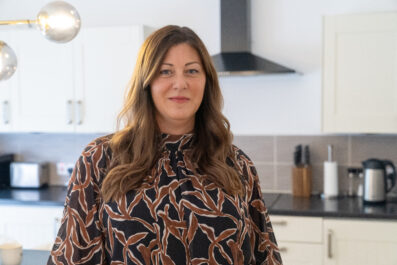
Pauline had thought about fostering for a long time. As she explains, “I have wanted to foster for many years, since when I had my own five children.”
But like many people, knowing when to begin wasn’t easy. It wasn’t until she retired that she decided, “now was the time—now or never.”
Even then, doubts quickly followed. Pauline remembers having “an enormous number of doubts” and questioning whether she would be suitable. She wondered, “was I too old? Was my house good enough? It wasn’t child-centric, I have no children living at home.”
Those thoughts built up to the point where, in her words, “I thought of every reason in the book of why they wouldn’t want me really.”
If you’ve ever felt unsure about whether you’d be accepted or whether your home is “right,” Pauline’s experience is something many people can relate to. What made the difference for her was simply finding out more. When she did, she was surprised to discover that “they did actually think that we would be ideal candidates.”
Choosing the right agency
When Pauline began researching fostering agencies, she took her time to look at different options. She explains, “I looked at lots of agencies, researched as many as I could find.”
What stood out to her about FCA was the clarity and honesty. “They were very upfront on their website. Everything was on there,” she says, which helped her feel informed from the start.
Just as important was the emphasis on support—but what really mattered was that it lived up to expectations. Pauline reflects that, “the amount of support that they said they offered is actually in place.”
For her, the most valuable part has been how that support works in practice. Rather than waiting for problems to arise, she found that “it’s the support you need that is identified before you even know that you need it.”
That reassurance can make a big difference, especially in the early stages of fostering. Pauline speaks particularly highly of her supervising social worker, describing how “she can identify any need I have before I even identify it myself.”
Feeling prepared
Like many foster parents, Pauline found the training and assessment process thorough and, at times, intense. She recalls, “the training was intensive… there was so much of it,” and admits they did question it along the way, wondering, “is all of this really necessary?”
It’s a common feeling, especially when you’re balancing learning with everyday life. But once they began fostering, that perspective changed.
Looking back, Pauline says, “I can’t tell you how many times over the last year I’ve called on that training.”
That preparation became something they could rely on—helping them feel more confident and supported when real situations arose.
The reality of fostering
Pauline is open about the fact that fostering comes with both challenges and rewards. As she puts it, “there are massive highs and lows – they can put you through it a little bit.”
Their first fostering experience was not without its difficulties. She describes how “our first foster child certainly did for many months, he was a very angry little 10-year-old.”
But with time, patience and consistency, things began to change.
Pauline shares how proud they are of his progress: “he is now the most lovely little boy… we are so proud of him and absolutely love him.” She has seen him grow in confidence too, explaining that “he has gone from a child who the only words he knew were ‘no’ and ‘I can’t’ to actually really achieving,” and that “he has a lot less fear of trying things new.”
Often, it’s the small, everyday moments that show just how far a child has come. For Pauline, one moment stood out. She smiles as she recalls, “last night he said that I was the best cook ever and much better than Gordon Ramsay.”
For a child who once said very little, that simple comment meant a great deal.
Discovering new strengths
Fostering hasn’t just been a journey for the children in Pauline’s care—it’s been a journey for her and Mark too.
Reflecting on their experience, she says, “fostering now has taught us both that we have skills that we didn’t know that we had.” Over time, they’ve also recognised their own resilience, adding, “we are more patient than we thought we were.”
It’s a reminder that you don’t need to have everything figured out before you begin. Many foster parents discover their strengths along the way, supported by the people around them.
A simple piece of advice
For anyone thinking about fostering, Pauline’s advice is warm and reassuring. She encourages people to take that first step, saying, “dip your toe in the water and find out and do it now.”
You don’t need to commit straight away or have all the answers. Learning more, asking questions, and exploring your options can help you decide what’s right for you.
And as Pauline has experienced, the impact can be felt sooner than you might expect. She reflects, “the difference you can make can start very soon,” and importantly, “it doesn’t just make a difference to the children, it makes a difference to you and your own families.”
More fostering stories:
Looking for a new career path?
Find out how you can make a difference…
By Phone
Call a member of our friendly fostering team and they’ll be able to answer all your questions
By Email
Email our team by completing our online enquiry form
Visit an office
We are always happy for you to pop in for a chat