Fostering Babies in the UK: Key Facts
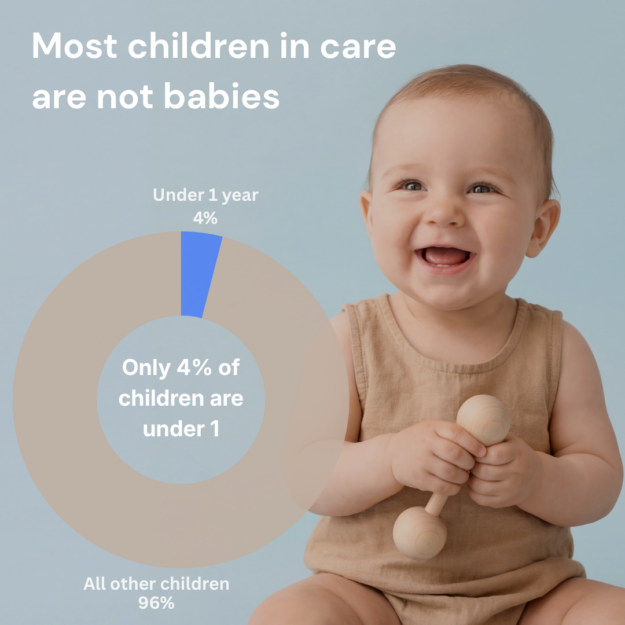
- Only 4% of children in care are under one
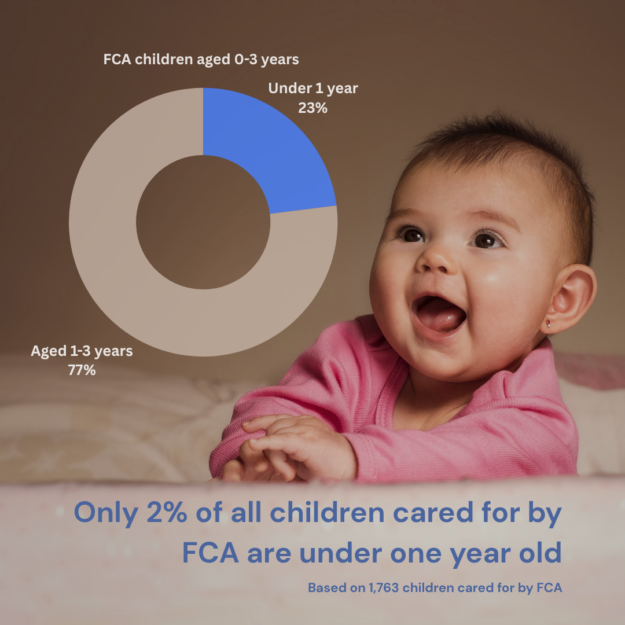
- Only 2% of all children cared for by FCA are under one year old
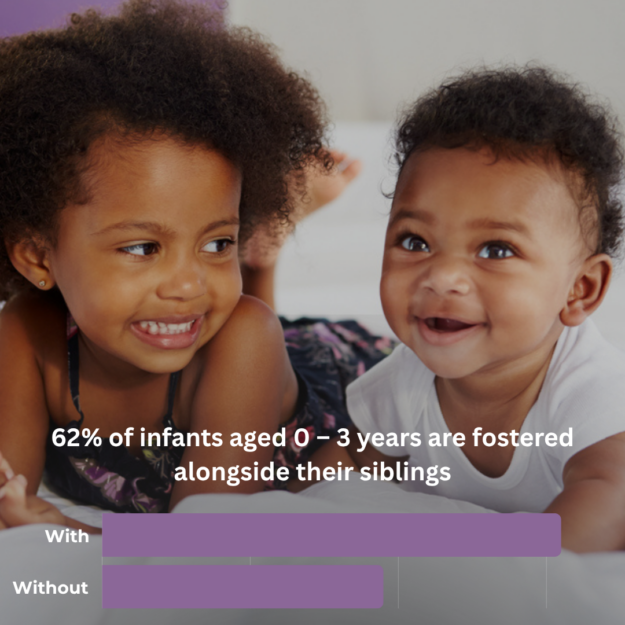
- 62% of babies (0–3) are placed with siblings
- 9% are in parent and child fostering arrangements
- Most baby placements are short-term, not long-term
What this means:
Fostering babies rarely looks like caring for a single newborn — flexibility is key.
Fostering babies in the UK is often imagined as caring for one single newborn at a time. The reality is very different. Most children considered ‘babies’ in foster care are toddlers, fostered alongside their siblings, or involved in parent and baby fostering arrangements.
In England, babies under one accounted for just 4% of the total number of looked-after children in 2025, and if you foster with an independent fostering agency, like FCA, the total number of newborns waiting for a foster home drops even further.
As a result, most people hoping to foster babies will be asked to consider siblings or parent and child placements.
Common misconceptions
Common misconceptions about fostering babies:
- Most people expect to care for one newborn on their own
- ‘Babies’ in foster care are assumed to mean under one
- Many believe baby fostering will lead to adoption
- The role is anticipated to be more stable and predictable than it is.
What is a ‘baby’ in foster care?
You may be surprised to learn that the definition of a baby in foster care is usually a child aged 0 to 3 years. While many people picture fostering a newborn, only 23% of FCA’s children aged 0-3 are under one year old. Most (77%) are aged between one and three, with three-year-olds making up the largest group.
Baby fostering is typically more complex, involving their brothers and sisters, or helping a parent who needs support, rather than providing newborn care.
If your goal is to foster babies, being open to brothers and sisters or parent and infant placements is the most realistic way to do so.
Babies and sibling groups
Most newborn babies are fostered as part of a sibling group. At FCA, 62% of infants aged 0 – 3 years are fostered alongside their siblings, as keeping brothers and sisters together is a top priority where safe and appropriate to do so.
According to the Children’s Commissioner Siblings in Care report 2023, relationships between brothers and sisters provide a ‘protective effect’ when children enter care. Siblings offer each other comfort, love, and a shared history that can improve their well-being, increase stability, and lead to more positive outcomes.
With fostering providers working hard to support sibling placements and such a high proportion of babies being fostered with their brothers and sisters, it shows us that being open to fostering siblings will increase your chances of caring for a younger child.
What is parent and child fostering?
Another route into baby fostering is through parent and child fostering arrangements, which account for 9% of children in our care aged 0 to 3 years.
Parent and child foster parents welcome a single mother, single father, or sometimes both into their home alongside their baby or young child. They support parents as they learn how to care for their baby and themselves, helping them build the skills they need to parent on their own, while also observing and keeping objective reports that will form part of a parenting assessment.
FCA foster mum, Claudia, provides parent and child fostering. She described it as ‘supporting the parent to care for their child in whatever way they need.’ She said, “It’s not like you’re doing the parenting. You’re the overseer, subtly giving the parent words of wisdom, advice and guidance.”
This type of fostering prevents parents from being separated from their babies while their parenting skills are assessed.
Claudia explained, “Lots of the people who come into our home under a parent and child arrangement don’t have support around them from their own family or friends, but living with us for a short time can prevent their child from moving into care, ultimately keeping one more child out of care and one more family together.”
These are specialist fostering arrangements, which means foster parents need to meet the following criteria:
- Must have a minimum of one year’s experience in fostering or experience in a relevant profession, such as midwifery
- Must have a spare bedroom large enough for a parent and child, along with reasonable living space
- Must be able to evidence objective record keeping.
Can I foster a baby on their own?
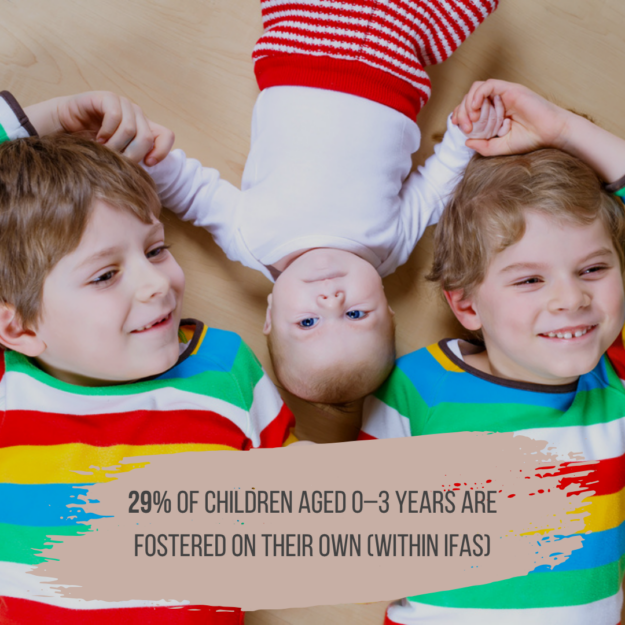
Fostering a baby on their own is rare, especially if you choose to become a foster parent with an independent fostering agency (IFA), like us here at FCA, where only 29% of all children aged 0 to 3 years are fostered on their own. Local authorities will only refer a child to an IFA if they can’t find a suitable match within their own pool of foster parents. With so many foster carers willing to open their homes to a baby, it means we’re less likely to be needed because there isn’t a gap to fill.
Sarah Ayling, Head of Referrals at FCA, explained, “We absolutely do get babies, but are we as likely to get a baby as maybe a 14-year-old girl? Probably not. It’s very dependent on timing, location, and the local authority.”
Referrals to IFAs, like FCA, are driven by local need, which is why sibling groups, parent and child fostering, and more specialist arrangements are often more common than caring for a single baby alone.
As a result, if you’re only open to caring for a single newborn, it can significantly limit the fostering opportunities available to you.
Why children come into foster care
The main reasons children are placed in care are abuse and neglect, making up 67% of children considered looked after in England.
Other reasons children move into care include:
- Family dysfunction, 12%
- Absent parenting, 8%
- Family in acute stress, 7%
- Child’s disability, 2%
- Parental illness, 2%.
- Socially unacceptable behaviour,1%
Safeguarding decisions about where a baby will be cared for and who by can be made at any point, sometimes before the child is even born, if a parent’s behaviour or health could put their child at risk or if they’ve previously had children removed from their care.
Most babies in foster care are in short-term fostering arrangements while plans for their long-term futures are made. Whether this is reunification with mum and/or dad, adoption, or kinship care, it’s unlikely that you’ll care for a baby long-term, unless it’s in their best interests to be fostered alongside their siblings on a more permanent basis.
Practical and emotional realities of baby fostering
Babies can have complex needs
The reality is that babies can have complex needs, too. They could be neurodiverse, have developmental delays, or have FASD, but not received a diagnosis by the point they enter care. Some needs only become apparent as they grow.
Sarah Ayling sees this misconception regularly when speaking to prospective carers, she said, “Some foster parents believe that babies are a ‘clean slate’, that they won’t have complex needs from trauma or be neurodiverse. They feel like they can help a baby more than an older child, when that’s not the case at all.”
If you foster an older child, their needs are more likely to be known, which means the support they need to manage their symptoms is already there.
This is one of the reasons why fostering a baby shouldn’t be assumed to be easier than fostering an older child.
Saying ‘goodbye’ is inevitable
When a baby enters care, they’ll typically move into an emergency foster home – a temporary arrangement lasting between a few days and a few weeks while the local authority completes their assessments.
If it’s decided that a baby needs to remain in foster care while more investigations and assessments are completed, they’ll move to a short-term foster home for up to two years. Over that time, foster parents will care for the baby like their own, helping them reach milestones and developing a bond that can make saying goodbye difficult.
It’s unlikely that a baby will be fostered long-term, unless they are part of a sibling group. They’re more likely to return home, live with extended family, or be adopted.
Foster mum, Claudia, has fostered a baby through to adoption and supported multiple parents in the early stages of parenthood, which means saying ‘goodbye’ has become something she’s had to get used to.
Claudia said, “When they live with you, they become family, and when they move on, they leave a massive imprint on your heart. Whether the child goes back home with their parents, is adopted, or fostered, even though it’s hard, it’s easier to make peace with because you know that’s the best route for that child. When you foster, you must always put the child at the centre of every decision you make, it’s not about you.”
This is what makes baby fostering particularly challenging, and you’ll need emotional resilience to manage the uncertainty, working with birth families, and saying goodbye.
Record-keeping is a big part of the role
What many people don’t expect is that baby fostering is more than just providing daily care. A big part of your role will be to write extensive daily logs, thorough reports, and accurate records that will form a crucial part of court process and assessments to determine the long-term plans for the baby’s care.
FCA Senior Supervising Social Worker, Faye Keadell, has found that many foster parents don’t realise how much admin is involved when caring for babies.
She said, “Foster parents have to keep detailed weekly and, in some cases, daily logs about the baby’s welfare. This might include eating and sleeping habits, and how these are affected when they return from family time arrangements.” If you foster a parent and a child, you’ll write observations about how well the parent is coping with caring for their child and themselves. You’ll cover things like:
- Are they keeping up with nappy changes and feeds?
- Are they tending to their baby during the night?
- How do they respond to their baby’s cries?
- Are they taking care of themselves?
Sometimes you’ll only be required to submit your records to the court, and other times you might be called to court to talk about the specific details you’ve provided.
Frequent family time arrangements
If you become a short-term foster parent for a baby while court proceedings are underway, part of your role will be to take the baby to family time arrangements.
When reunification is a possibility, contact with the birth family can happen as often as two to five times a week and will sometimes involve travelling a distance.
Faye Keadell explained, “Frequent family time arrangements support the baby’s relationship with their parents, while helping them maintain the routine of caring for their child to make the transition back home easier for everyone, if reunification happens.”
Foster parents, therefore, need to be comfortable meeting birth parents regularly, often travelling, and maintaining a non-judgemental approach, alongside having a schedule flexible enough to facilitate this contact time.
To learn more about family time arrangements, read our Supporting Babies and Birth Families article.
Financial implications
At FCA, we offer generous fostering allowances, which are paid while a child is in your care.
If you only want to foster a baby it could take longer to be matched with a child, and you could experience significant gaps between placements because this type of fostering is rare. During these periods, you won’t receive a fostering allowance, so you’ll need finances stable enough to handle a drop in income.
Being open to fostering older children, sibling groups, or babies alongside their parents can help provide greater consistency in both placements and income.
The children who need you most
Figures reveal that in 2025, 65% of children in care in England were aged 10+. A common myth is that there is only a limited window to help a child heal from their past experiences, so fostering a baby is the only way to make a “real difference”.
The truth is that when a child is matched with the right foster family, it doesn’t matter how old they are when they enter your home; you can still have a significant impact on their lives.
Older children in care are more likely to have experienced multiple home moves and need stability to reach the best possible outcomes. Without it, they are more at risk of homelessness, poverty, and/or going to prison.
Foster parents tell us that one of the most rewarding things about fostering older children is seeing the impact they’ve had firsthand on a child’s behaviour, emotions, education, and ability to form healthy relationships.
While fostering babies plays an important role, the greatest need across the care system is for foster parents who are open to supporting older children and sibling groups.
Sarah Ayling said, “There’s one foster parent story I always tell to foster parents waiting on a placement or to those who are unsure about welcoming a child outside of their predetermined age bracket.”
“I knew this foster parent well and she was adamant she only wanted really little ones, as is so often the case. But she had the perfect life experience to help a teenager with quite a specific set of needs.”
“I asked her and asked her again and really tried to show her how well matched she would be with this teenager. She said no and asked me to stop calling. After a few days she called me back saying she’d been thinking it all through and she wanted to foster the teenager. They went on to spend years together and it was one of the most positive fostering success stories I’ve seen. Our foster mum just needed to trust that we knew what we were doing.”